Look beyond the program name: ask how it will be used for your child.
Terms such as customized learning, small groups and premium programs do not explain the actual learning experience. During consultation, ask how the academy identifies the student's current level, changes materials, responds to weak points and connects academy work with school.
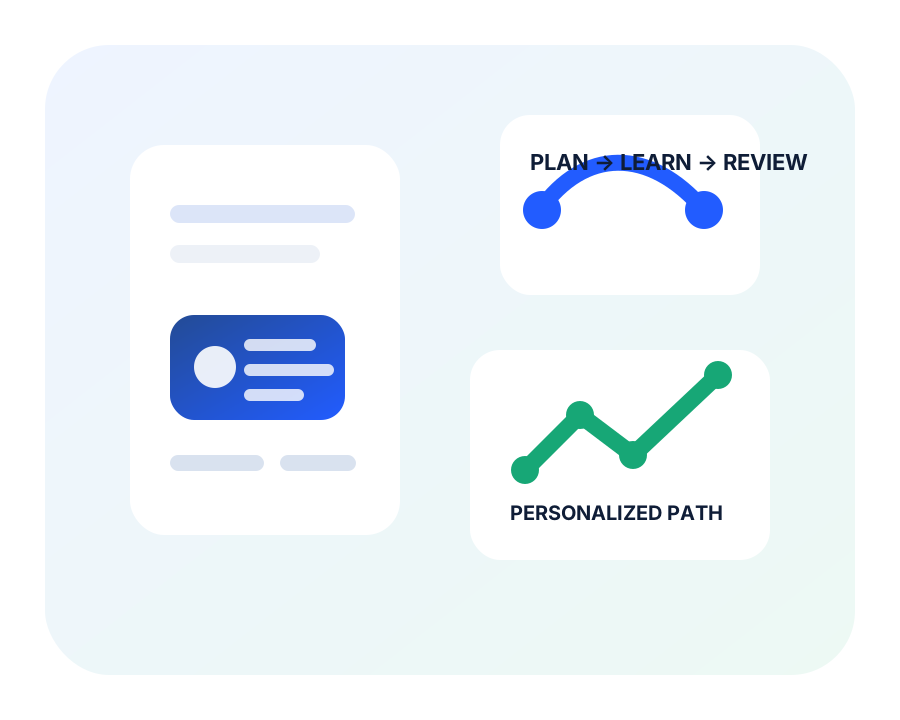
1. Ask what 'personalized' actually changes
Do materials differ? Does homework volume change? What happens when a new weakness appears? Specific answers reveal more than slogans.
2. Ask how errors become new learning
Find out whether wrong answers lead to related problems, supplementary explanation or a targeted material change rather than only an error notebook.
3. Check whether academy planning fits school reality
Middle school includes tests, performance tasks and school assignments. A useful planner should reflect that reality.
4. Separate a program brand from actual implementation
Using a known platform does not mean every feature is used. Ask which modules and materials your child will actually use.
FAQ
What should I bring to a consultation?
Recent tests or worksheets, difficult units, study-time patterns and one or two priority goals are useful.
Does small-group automatically mean personalized?
No. Ask whether materials, feedback and supplementary work actually differ by student.
How should I judge outcome claims?
Prefer a clear diagnostic and feedback process over unsupported promises of scores or rankings.
Start with the learning flow that fits your child.
Tell us the grade, current challenge, and priority subject so the consultation can start with the right context.